Monday, March 31, 2014

PSY 317 "Parenthood"


      This film portrays how one family of different households ended up with different parenting styles towards their kids and the consequences of it.


       The start of the movie was funny and non-cliche. It was hilarious listening to a young boy speaking like an adult, claims he is 35, and have a grown-up wife with kids, which in the end turned out he IS a 35 year old adult speaking to his 'amalgam' in his childhood memories. The scene where Karen wants to 'help' the angry Gil in the car and crashed was hilarious, especially the part where the policeman asked how it happened then Gil answered "Show him, Karen". I could hear the whole class laughing at these scenes. We must not miss the diarrhea song too. (>v<)b Haha...


Parenting Styles

       Eh-hem! ....  OK...         Back to serious business, now it is time to read about each parents' parenting style and the consequences of it. Let's start from the eldest parent.


       The father of the Buckman family, Frank, obviously is introduced as a neglectful parent towards his children especially seen from the opening scene where he would leave his eldest son, Gil, to watch a baseball game with a paid usher while he meet up with his own friends, on his birthday. But, his style changed with his youngest son, Larry. We could see that Larry had always been his favorite son and was treated with more love than the older children. With Larry, his style changed to permissive and with his grandchild, Cool, he utilizes authoritative parenting.


       The eldest son, Gil, also used a permissive style with his children. Though it looks like, authoritative parenting, there were no clear rules. This can be seen by how Gil and his wife, Karen, lets their youngest son, Justin, continuously bang his head and eats the stickers from Patty's mathematical flashcards. As well as the product of their children's problems in school, where their eldest son Kevin, had to see a psychiatrist for emotional problems, their daughter, Taylor, kissing everybody (boy?) in school, and Justin with his head banging. Though they are still good natured children, they are also seen as pampered kids.


       The second child of Buckman family, Helen, had a hard time raising her children after her divorce. She somewhat portrays authoritative parenting where she did set rules for her daughter, Julie. But in exact, Helen is permissive at first with no clear rules for her son, Gary, and when she regrets chasing her daughter, Julie, out of the house. Slowly towards the end, she shows her authoritative side where she listens and attends to her children's needs without forgetting to set some rules. This can be proved by how she let's Tod, Julie's boyfriend, live in her house and talk to Gary as well as berated them as to solve their problems.


       Susie Buckman and her husband, Nathan, also changed their parenting style throughout the film. They first used an authoritarian style where they trained and teach their daughter, Patty, many things at a young age and restricted her play.


In between, Susie started to realize how different her child is in play when observing and comparing other kids. After some conflict and resolution between Susie and Nathan, their parenting style changed to the authoritative style. Patty also can be seen as a happier child in the end.


       The last Buckman child, Larry, is a neglectful parent that only knows how to gamble and go for get rich fast schemes. I believe this is because of the father, Frank, who used to spur on the get rich idea. Larry is the result of Frank's permissive parenting. It can be seen that he did not at all involve himself in parenting his son which symbolizes his father's previous parenting style. (or worse)


       To me, there is no perfect parenting style. I believe we should adapt to the child's behavior and temperament exclusive of permissive and neglectful parenting. For example, my mum was authoritarian and uses physical punishment along with strict, yet, reasonable rules when I was young. But, as I grow older, she become more authoritative as she know I'm mature enough to make a right decision myself.




Monday, March 24, 2014

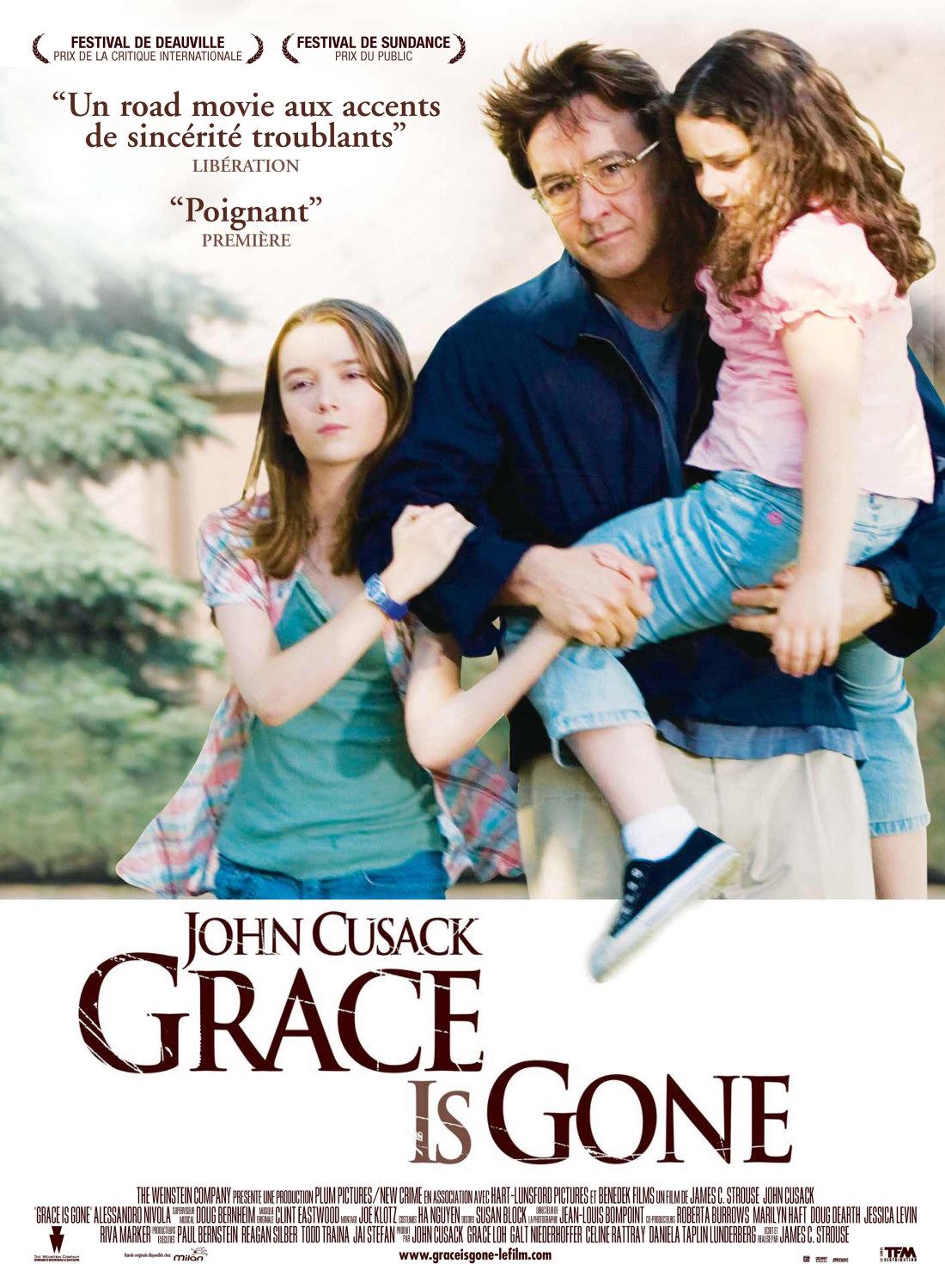
PSY 317 "Departures ~ Okuribito" & "Grace Is Gone"


Two back-to-back movies of grief and tears.

Departures & Grace Is Gone


       A Japanese movie focusing on the culture of making the body clean and beautiful before putting them into the coffin and sending them off to their new journey.


        Whereas Grace Is Gone, focuses on how a husband goes through accepting and breaking the news to his daughters about Grace, his wife, their mother's death.


Death

       Before moving onto analyzing the movie :P, I want to state my believe that Kubler Ross's 5 Stages of Death is applicable to both the person experiencing death and those close to them. Therefore, everybody experiencing death of their loved ones would also go through 
  • Denial
  • Anger
  • Bargain
  • Depression
  • Acceptance


       I believe no matter it is Western or Asian cultures, they will eventually go through the same stages. The only difference is the time and how they accept it as they go through the acceptance stage. In Departures, it is a film of Japanese culture during the funeral where the people had already accepted their death and preparing to send them off to the other world. Through those different funerals, we are able to recognize how different people and family watch as their loved ones were slowly cleaned up as they were alive before being encoffined, as well as burned off to their gateway. The process was so elegant and graceful, especially how they respect the body and the family, made me confirm that Japanese is of a different culture from Chinese. I know that Chinese culture also make-up the body but the Japanese do it in front of the family. In the middle of the film, the encoffinment became more happy and various in how they said good bye or how they beautify them like how the granddaughters put loose socks on the grandmother plus how the wife and daughters leave kiss marks on the father and said thank you to him. It shows that not everybody deals with the departures sadly.

       From the last scene of Kobayashi Daigo's father encoffinment, it really shows how important the process is to the family as well as how a person's death / funeral is a task and a new adventure of those left behind. This can be seen how the stone from his father's hand threw his hatred away and passing down the stone to his unborn child.


       In Grace Is Gone, Stanley Phillips took a longer time to fully accept and tell his daughters about the death of Grace Phillips during duty. This focuses more on the whole 5 stages where at first he denies Grace's death by calling back home to listen to her voice and imagine that she's ok as well as refuses to talk about it with the soldiers and his brother. Anger was released with making donuts on the fields as it was frustrating to go back and face reality. {Of course, there were other scenes but this scene was what I could relate to.} Bargain was not displayed or experienced as Stanley thought that her death, though not acceptable, was still patriotic and was for the protection of the country. This is also one of the distractions which I believe to fall under denial. Depression was experienced along the whole journey till Enchanted Garden. It was obvious on how Stanley hardly smiled and was still unable to tell his daughters about their mother's death. Lastly, he finally accepted the fact to his gut and decided to tell Heidi and Dawn their mom's death.

       I believe that what Heidi went through was not about the mother but the uncertainty of her father's actions. She was strong to handle the news after hearing the voice message left by Stanley. I think she somewhat guessed the situation but did not expect it to be a death as shown in the beach where she rejected and denied what her father said about their mom.


       As a sum, all deaths were grieved at the funeral more. There were not much difference despite of different cultures. As I had experience a few deaths around me, I feel that as long as they died in peace and going up there which could be either heaven, or pureland, or any other levels. Before this, I wouldn't think that I would be this open. But, after maturity and experience I believe death is inescapable, nature thing as said in Departures. It is no use to grieve on the deaths of someone who has left, but to treasure those who are still alive.

It is hard to cherish those alive. But, it is harder to accept one's death with regret.


        So, if you can't stay close to them, make regular visits. Make sure you observe others' sudden change of behaviors along with fulfill their wishes.


Monday, March 17, 2014

PSY 317 "When A Man Loves A Woman"

Four Roses Bourbon


       This movie portrays how an alcoholic wife and her husband struggle their way through before and after dealing and treating alcohol. A tear-inducing movie that revolves around the family and their interaction with each other.


Alcoholism

       This film displayed how Michael and Alice Green, including their daughters Jess and Casey, were involved into the drinking habit as well as their way of seeing alcoholism. Alice was at first a normal woman with no signs of alcohol abuse until after her marriage. The director made Alice depend on alcohol because of her lack of ability to deal with stress. Alice also claimed that she was belittled by her mom and Michael, not smooth at work, and would suddenly feel down and very sad. The daughters also proclaimed that their mother always hide in the toilet and cry before she drinks and become drunk.

       Before treatment, Alice is aware of her doings but could not control the behavior and the urge of drinking. There were many bottles of wine hidden cleverly inside the house. The turning point that made her want to change is that she hit Jess and fell down unconscious on the bathroom floor.


       When in the treatment centre, we can see how hard the alcoholics go through when deprived of alcohol. Alice was sweating and frustrated when she was under detoxification.


       I find it quite amusing to how most of the alcoholics in the end develop smoking habits in order to relieve and substitute for the alcohol consumption. To be fair, smoking excessively will only deteriorate own and others health whereas drinking excessively could risk someone's safety and lives. In this movie, Alice did not return back to drinking alcohol but did not adapt well to life at home after coming out.


Ripple effect

A ripple effect is as the phenomenon displayed in the picture. A drop of water spreads little waves of water outwards and become still water again. Many drops of water spread their own water waves outwards but in the end meets with other waves and gradually stops. The ripple effect in this movie is how groups of people suffering alcoholism and alcoholics' spouses get together and share their own personal stories, learn new experience or improve own mistakes, along with learning there are others who are in similar situations or are going through worse. This group activity also helps by empathizing others, care for them, as well as influencing others.


Finale


         Based on current statistics, there are not much successful relationships and marriages. With little or many conflicts in and out of these relationships, not many couples could fight through reality. I believe that if a couple "really" loves one another, they could go through many obstacles and still be together in the end. A happy ending needs a lot of damned hard work to make it possible. My believe haven't changed after watching the movie but has added some points to it.

Couples who "really" loves each other, have respect to self and the other as well as find ways to adapt to changes in life will still be together in the end till they die.


       In a sum, alcohol can be beneficial in small amounts as well as deathly, dangerous in large amounts. Even if someone became alcoholic, it is never too late to stop. But, it needs real determination to change. There are obvious symptoms of alcoholism as well as a few treatment centre's withdrawal symptoms. SO...... Be careful with your own drinking and remember to control yourself.


Monday, March 10, 2014

PSY 317 "Chariots Of Fire"


       Basically a historical movie of the running lives of Eric Liddell and Harold Abraham. 


       Who are they?

Harold Maurice Abrahams - A Gold medal winner for the 100 metres run.
                                           - A Jewish Englishmen who had been discriminated by other Englishmen.
                                             To avoid all these, he decided to win in an aspect he is confident and good
                                             at which is running.

Eric Liddell - In the film, he was emphasized only as the Gold winner of the Olympic's 400 metres run.
                    - A Scottish missionary who was born and died in China.
                    - He quit rugby to run in the Olympics before going back to China as a missionary.


How the film portrayed them?

       A 'normal' Scottish Christian and a 'normal' Englishmen (Jewish) as any other who lived their passion and broke the record of running in the Olympics. It was said that the way Eric Liddell ran was as portrayed in the film. I watched some clips from youtube and think the one in the film ran with more hand movements. There was also a part where Eric chose not to run on a Sunday, Sabbath day, and missed one of the categories that was the 100 metres. His determination proved that he still remembers and honors God even if he is running on the track.

       All of those running scenes made me think of how the director behind the scenes shouted at the runners. I would imagine that in the race the director would shout out "slow down", "don't run too fast", "let him win", or even "put your head back", and "swing your arms harder", "you are Eric, smile". It makes me realize how funny it would be if we can hear these voices on screen or as bloopers..... (Appreciate the job of the backstage crew)

       Other than that, I won the bet of guessing Eric will win Harold of their first encounter. Muahahahahaha..... (KIASU.... (-_-)|||...... To me, it was kind off predictable as Harold was getting a little high up the air and to win the Gold medal he needs to be hit back down to the ground plus realize there are other high mountains. I also think that even though it is a movie, the storyline was from a real life individual. As the Chinese saying goes "戏如人生,人生如戏", which means life is like a movie and vice versa. Things portrayed in the movie could come from real experiences or the interaction between people along with how successful life in movies could be accomplished.

Motivation

       To me, I think that both Eric and Harold are experiencing intrinsic and extrinsic motivation. But according to the film, Harold was somewhat an intrinsic then unconsciously developed an extrinsic motivation. Harold wanted to show people how he could "run them off their feet" being a Jewish as well as the want to be accepted as an Englishman. After losing to Eric Liddell, Harold wanted to win against him and have a more stronger desire to be the fastest of them all. 

       Eric, however, ran because he loved it, he intrinsically was motivated by it. He also believed that running is like running with/for God and when he ran, he could feel God is beside him, running with him. He would rather delay his missionary duty for running. As God is within, Eric is obliged and happy to do what he can do for his passion and God.


       In a sum, as always never give up and try harder. It is never too late. To be good at something, we must have our own drive and motivation to pick us up and going. Without the motivation, people would experience burnout even faster and frequent than a person who love doing their job. Good luck to sports people in training and Enjoy the Movie!!!


Monday, March 3, 2014

PSY 317 "Dances With Wolves"

How the main character, Lieutenant John Dunbar, got his Sioux name.


        This movie is all about how one soldier who had learned to despise the 'Red Indians' getting to know them and in the end be a part of their culture. Before and during the warming up with the native Americans, all of them and John displayed many cute and hilarious scenes, which comes to show that they are really trying to understand and know about each other as well as what they are saying or thinking. I really like to see how different people and culture blend with each other and this film have the transition of who/what are you, what are you saying, can you be trusted, until they blended in with each other where John learned Lakota and Kicking Bird learned English.

       It was somehow intriguing to see how John Dunbar slowly threw away his soldier identity and became one of them obviously through his clothing and his shaved beard. It was also fun to see how the Siouan learned and applied John's english in a short time. However, until now I still don't understand why must one start war or kill each other. When fighting against the other native American clan, they said it was an honor and pride to do so as to protect their family and food supplies. Since they are capable enough, why can't they just provide information where the bulls are and not kill each other? Unless the other tribe's culture encourages killing of others {which is also stupid, but it's their culture} to get what they want and need. 


Intergroup Contact Theory

       Many researchers including the our known researcher, Allport, had run various researches regarding the intergroup contact theory in order to reduce prejudice and racism. Pettigrew & Tropp ran many meta-analysis and research to find that intergroup contact could reduce racism surrounding 3 types of themes, which are knowledge of others' culture, reduces intergroup anxiety, as well as empathy towards others. Through association within a group, members will get to know about the other person whether or not they are from a same culture or otherwise. For example, John and the native Americans had a few meetings before he could visit their village again still without learning each other's language yet. This also means to understand others, verbal language is not the most essential element but it is still in top 2. There are many scenes where John waved at their people and slowly everyone learned it and waved back.

       Anxiety towards other culture can be reduced when groups of individuals associate together for a certain goal. Like when John Dunbar at first was ready to attack back at the 'Red Indians' and when they Siouan steal his horse. These scenes were full of fear and anxiety towards the other party. But slowly after the first meeting {Tatanka} and the coffee with sugar meeting, they slowly open up to each other and .... all of us know what happened in the end.


       Empathy and Perspective Taking happens especially in cross-group friendship. Befriending each other always happens and sometimes started off by taking their perspective into thought and empathize their feelings. The only scene I could think of so far is how John understood their need for food and fur of the bulls. He risked his safety barging into the village (as he was still a suspicious white man) to tell them bulls are around the corner.


       Throughout these recent movies, we should by then realize there is no our group against theirs or them against us. We are still humans with different cultures, ethnic, race, gender, age, and skin color and so on and so forth. Though there are some "inhumane" rules in some tribes and culture, we are all still a part of this cruel reality.

"We Are The World" by Michael Jackson


Reference

1 - Pettigrew, T. F. & Tropp, L. R. (2008, October). How does intergroup contact reduce prejudice? Meta-analytic tests of three mediators. European Journal of Social Psychology, 38 (6), 922-934. doi: 10.1002/ejsp.504